As we help our children learn to navigate the world, we naturally look forward to the day they can do things on their own. In the Montessori philosophy, we emphasize the cultivation of independence from the very beginning. But did you know that individual independence isn’t actually the end goal?
Dr. Maria Montessori observed that human development is a journey toward something much greater: interdependence.
To understand how a child transforms from a dependent infant into a collaborative, community-minded citizen, we look to what Dr. Montessori called the Planes of Development. At Rose Hill Montessori School, our prepared environments are intentionally designed to support the specific needs of children as they move through these natural stages.
The Prepared Environment: The Foundation of Self-Construction
A core element of our school is the prepared environment, a carefully designed classroom space that gives children the freedom to move, choose their own work, and act with a clear purpose.
This freedom exists within structured limits, which beautifully supports the development of a child’s unique personality. We become who we are through purposeful movement and conscious choice.
Independence is not just about being able to do something alone; it is about becoming oneself. Yet, as human beings, we don’t exist in isolation. We live among others. In order to live effectively in community, we must first be able to function independently. Put another way: before we can offer genuine help to others or make ourselves useful to our community, we must first learn how to meet our own needs.
The Primary Years (Ages 3–6): The Formation of the Individual
During the first plane of development, children are focused on adapting to their immediate environment and gaining functional independence. By the end of this period, a child can walk, talk, choose activities, and care for their basic bodily needs. They no longer rely completely on adults for everyday tasks, making them ready to take their place in a true social setting.
Dr. Montessori referred to the latter half of this period as the "social embryo," a time when children are just beginning to participate in group life and shape their sense of self within a community.
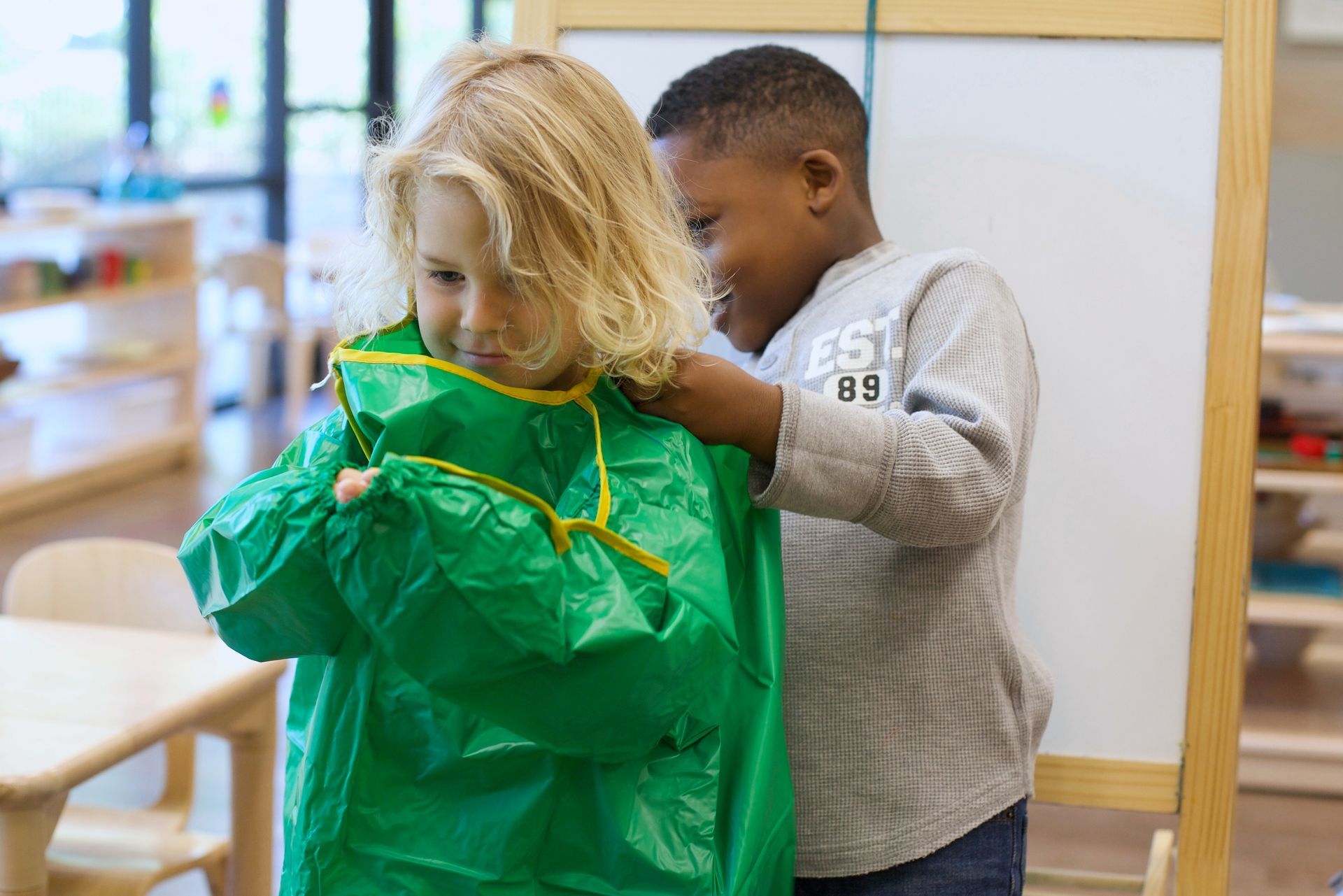
In our Early Childhood (Primary) classroom, we offer children endless opportunities to build this functional independence. You will see children:
- Zipping their own jackets and tying their shoes.
- Pouring their own water.
- Taking care of the classroom by sweeping spills or organizing materials for the next child to use.
Once a child masters the physical skill of pouring, they can use it to beautify the classroom by pouring water into a vase for flower arranging. After learning to sweep, they notice a classmate's spill and take the initiative to clean it up. When a friend struggles with a coat zipper, they are eager to step in and assist.
Caring for oneself and caring for the classroom environment naturally lays the foundation for a lifetime of community contribution.
The Elementary Years (Ages 6–12): Intellectual and Moral Independence
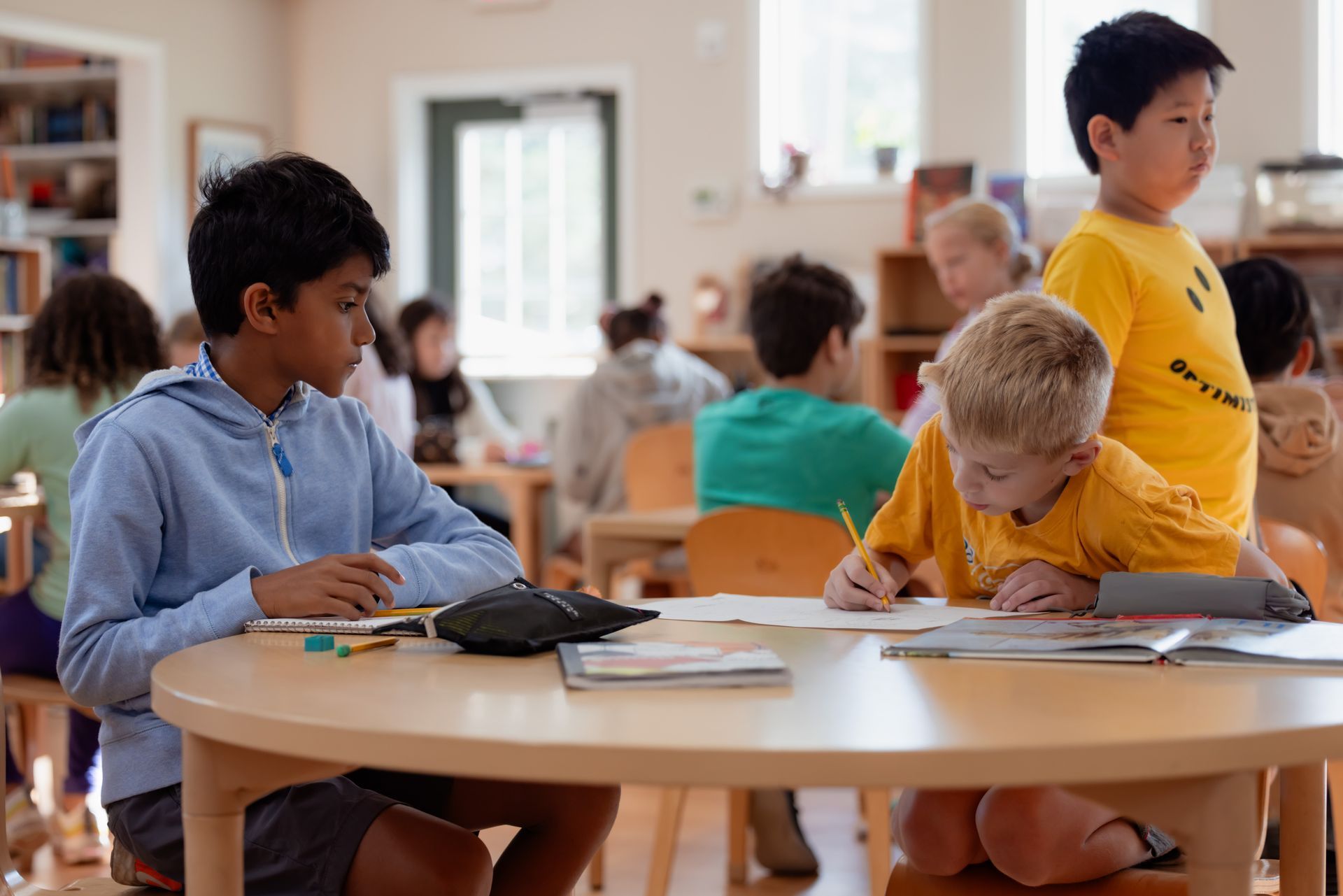
In the second plane of development, which we serve in our Elementary program, the child's focus shifts from physical manipulation to deep intellectual and moral exploration. Children begin to ask massive questions: “Why?” “How?” “What if?” Their imagination and reasoning mind take center stage.
Socially, this is a period of intense peer interaction. Children form close friendships, work collaboratively on large research projects, and begin sorting out moral questions of right, wrong, and fairness. Montessori described the Elementary classroom as a
"practice society", a safe, supportive space where children rehearse the roles, negotiations, and responsibilities of society.
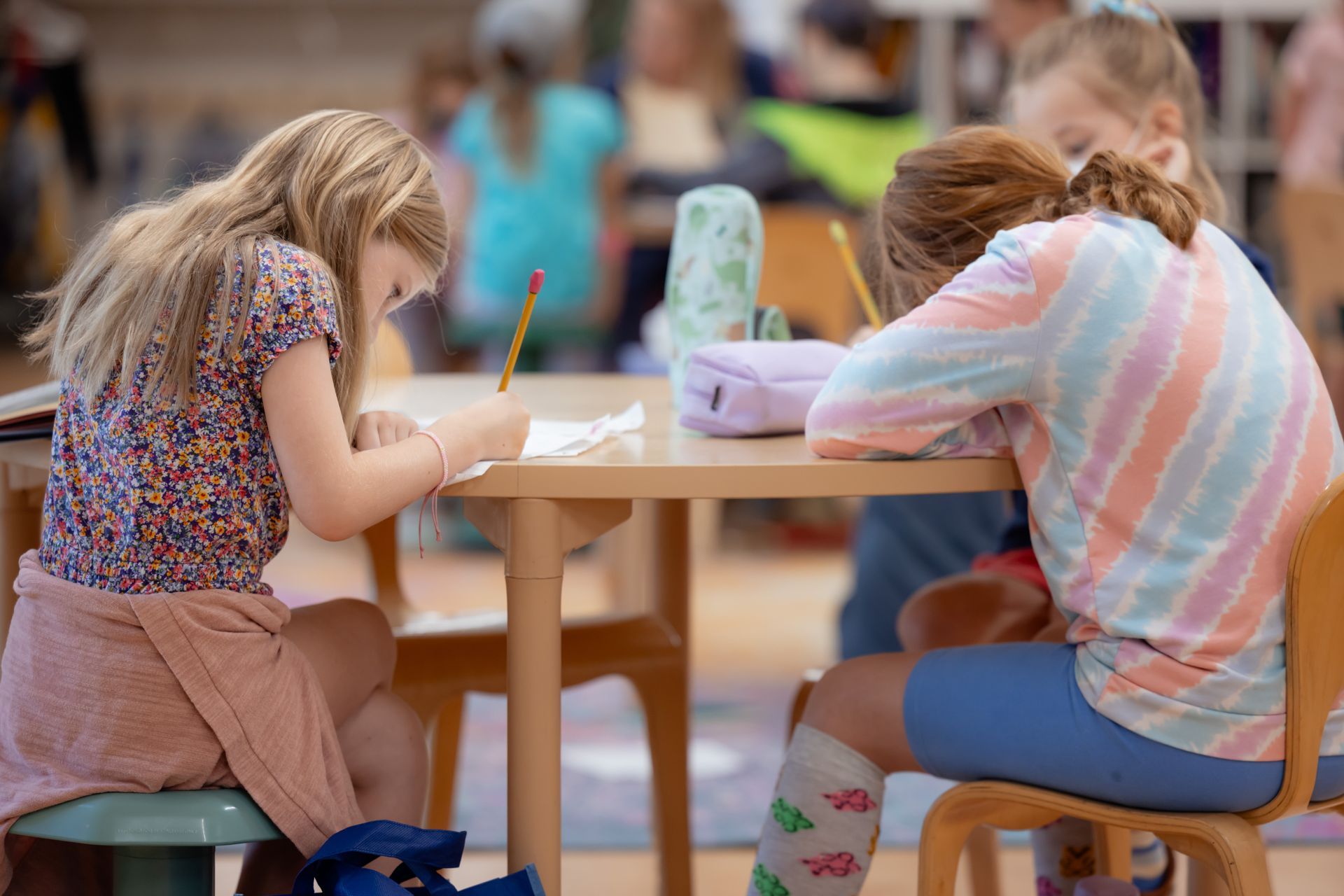
While the Primary child’s internal drive says, “Help me do it myself,” the Elementary child’s drive says, “Help me think for myself.” Their independence becomes more abstract as they form their own ideas, solve complex problems, and take responsibility for their own learning.
Within this intellectual and social freedom, we see the beautiful seeds of interdependence take root:
- Peer Support: An elementary student notices a classmate struggling with a long division concept and offers a spontaneous peer lesson.
- Conflict Resolution: Students host community meetings or sit down together to mediate a playground conflict, using logic and empathy to ensure everyone feels heard.
Their hard-won independence is no longer just an individual skill. It becomes a conscious tool for service and connection.
The Horizon: Social and Economic Independence
Though our programs at Rose Hill currently culminate in the Elementary years, the Montessori journey continues into adolescence (ages 12–18), where the need for independence transforms into a quest for a social and economic place in the world.
The ultimate trajectory of a Montessori education across all these stages is the development of
true maturity. Maturity goes beyond academic achievement; it is the holistic development of a person who is emotionally secure, intellectually independent, and deeply aware of their responsibility to the world around them.
Why This Matters for Parents
Every single act of independence, from a young child persistently putting on their own rain boots to an elementary student independently managing a week-long research project, is a necessary step toward full, meaningful participation in human society.
| Developmental Signposts | What It Looks Like | What It Subtly Communicates |
|---|---|---|
| The Primary Child | Insisting on dressing themselves or cleaning up their own spills, even if it takes twice as long. | "I am capable of mastering my physical world and caring for myself." |
| The Elementary Child | Questioning rules, debating fairness, and wanting to negotiate family boundaries. | "I am developing my moral compass and learning how to live justly with others." |
So, the next time your child insists on doing a task without your help, or challenges a boundary with a question of fairness, take a deep breath and pause. Remember that these are not moments of defiance. They are beautiful, necessary signs that your child is exactly on the right path.
In the Montessori philosophy, individual independence is never the final destination. It is simply the beautiful path toward interdependence, a life of meaningful work, mutual respect, and profound connection to the community.
Want to see this journey in action? We invite you to
schedule a visit at Rose Hill Montessori School here in Boise, Idaho, to see firsthand how our prepared environments foster the independence that leads to a peaceful, collaborative community.