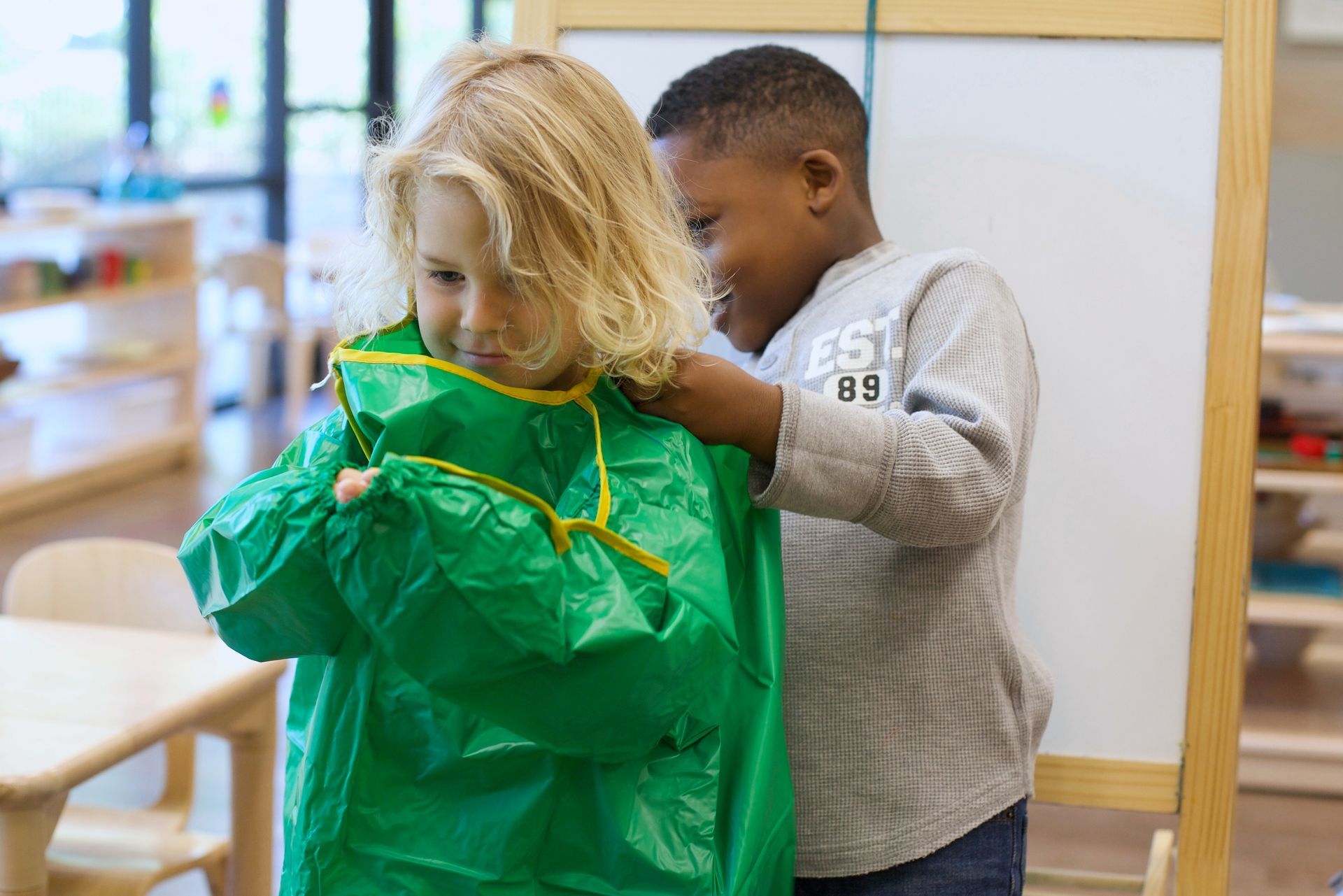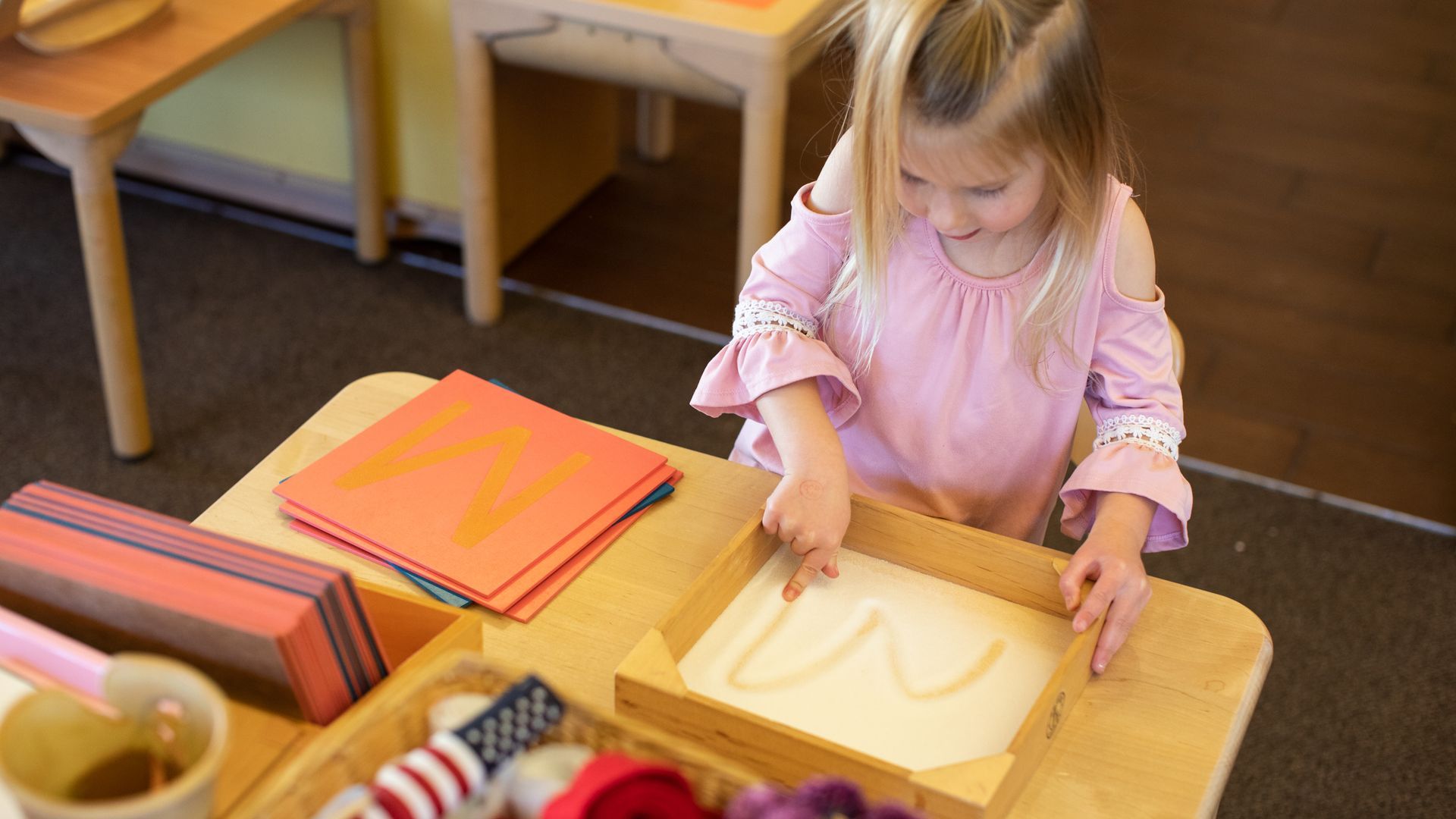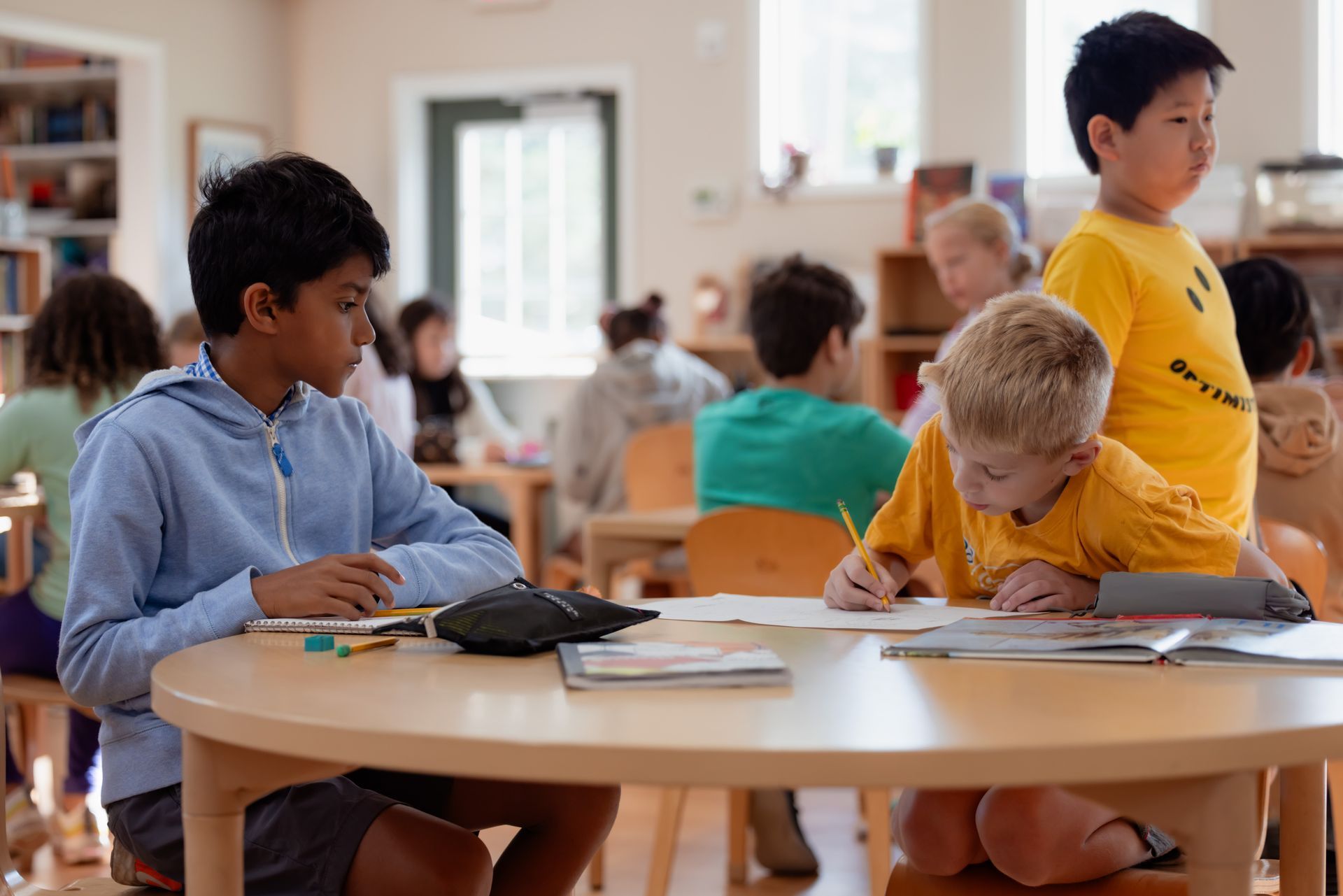
It is easy and understandable to focus on the remarkable academic outcomes of a Montessori education. A major 2023 meta-analysis covering 32 distinct studies confirmed that students in Montessori programs consistently outperform peers in traditional settings across language, mathematics, general academic capability, and executive functioning.
Yet, as vital as intellectual vigor is, academic performance is only one aspect of a child's holistic growth.
The social-emotional development nurtured within a Montessori environment is equally profound. This is particularly striking during the Elementary years (ages 6 to 12), when children undergo a dramatic transformation as social beings. Through mixed-age learning communities, collaborative research, and authentic peer interactions, Montessori elementary students build sophisticated collaboration strategies, conflict-resolution techniques, and emotional self-awareness.
By aligning our approach with human nature rather than fighting against it, we support children through one of the most vibrant developmental phases of their lives.
1. Collaboration: Honoring the Gregarious Mind
At the elementary level, a child's focus shifts from the individual "me" of early childhood to the collective "we." Children in the Second Plane of Development possess an intense, biological drive toward social connection. They want to move together, converse, plan, and work in groups.
Rather than treating talking and socializing as distractions to be quieted, a Montessori elementary classroom uses this natural drive as an engine for learning. Group work is an intentional, foundational component of the daily curriculum.
Through collaborative research projects and small-group lessons, children learn to:
- Communicate complex ideas respectfully.
- Navigate differing opinions and compromise.
- Lift each other up rather than compete for individual recognition.
We help children realize that genuine collaboration accomplishes far more than individual competition. As students experience what it means to contribute meaningfully to a team, they build a healthy, grounded sense of belonging.
2. The Classroom as a "Practice Society"
Dr. Maria Montessori described the elementary community as a "practice society."
It is called a practice society because children are learning to navigate complex social structures that they have not yet mastered. Social fluency does not happen overnight. It requires trial, error, and repetition.
Inevitably, when group work takes place, friction occurs: miscommunications arise, feelings are hurt, and opinions clash. In a Montessori classroom, these moments are not viewed as disruptions to the day; they are welcomed as essential social lessons. Guides provide the time, language, and peaceful framework to help children sit together, express their needs, and resolve conflicts restoratively.
The word society comes from the Latin root for companion, implying friendly association. Elementary students take real pride in caring for their classroom environment, managing daily community jobs, and ensuring that everyone's needs are met collaboratively. They are literally practicing how to be contributing, empathetic citizens of a community.
3. Hero Worship and Prosocial Leadership
Elementary-aged children naturally seek out figures of strength, moral courage, and capability to admire. In Montessori, we channel this natural phenomenon of "hero worship" across the curriculum.
We introduce students to diverse historical figures, scientists, artists, peacemakers, and innovators who used their unique talents to improve the world. As children research these figures, they begin to reflect on their own potential:
- Recognizing Individual Strengths: Students begin noticing the unique gifts of their peers, recognizing who excels at artistic illustration, who is precise with statistics, or who is a gifted storyteller.
- Inviting Collaboration: Children naturally invite peers to join projects based on their complementary strengths, ensuring everyone feels seen and valued.
- Joyful Leadership and Followership: Capstone students step into leadership roles with humility, while younger peers learn how to participate cooperatively. Leadership becomes about service to the group rather than status over others.
4. Solidifying Life Skills in a Mixed-Age Setting
In a mixed-age elementary classroom, children are freed from the artificial pressure of comparing themselves strictly to same-age peers.
Older children solidify their understanding by mentoring younger classmates, practicing patience, active listening, and clear communication. Younger children receive gentle encouragement from peers they admire, seeing a clear roadmap of what they will achieve in the years ahead.
Through this continuous peer-to-peer exchange, students learn how to:
- Prioritize complex tasks and organize multi-day projects.
- Seek support comfortably when facing an obstacle.
- Converse with adults and community members as allies and partners.
When Montessori 6th graders step out into the broader world, they carry a distinct confidence. Having spent years in an authentic practice society, they know how to ask thoughtful questions, advocate for themselves, collaborate across differences, and contribute meaningfully to any group they join.
Experience Our Practice Society in Action
At Rose Hill Montessori, our elementary community is alive with purposeful conversation, deep research, and collaborative joy. We invite you to
schedule a tour to see how our students practice the social and emotional skills that prepare them for life.