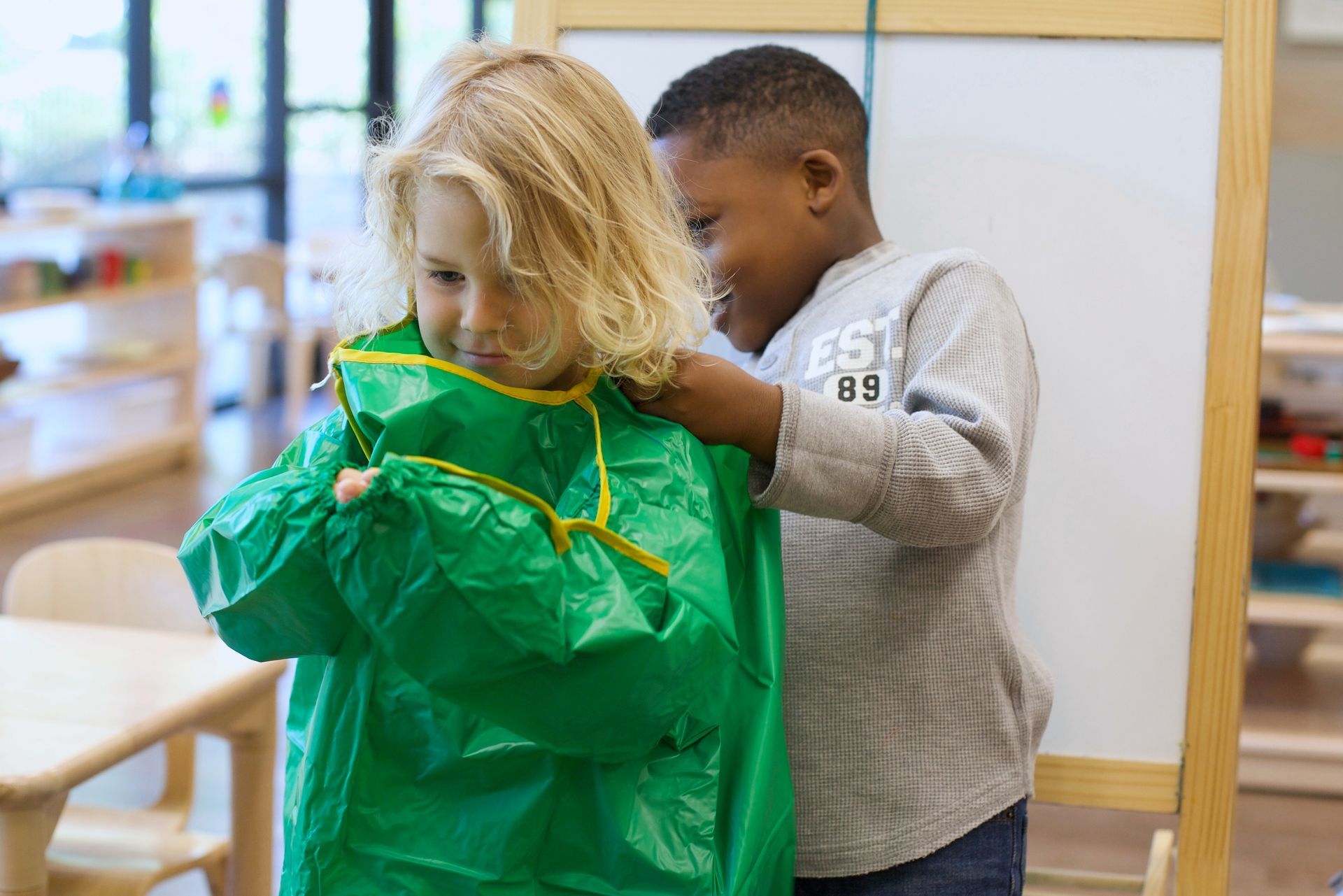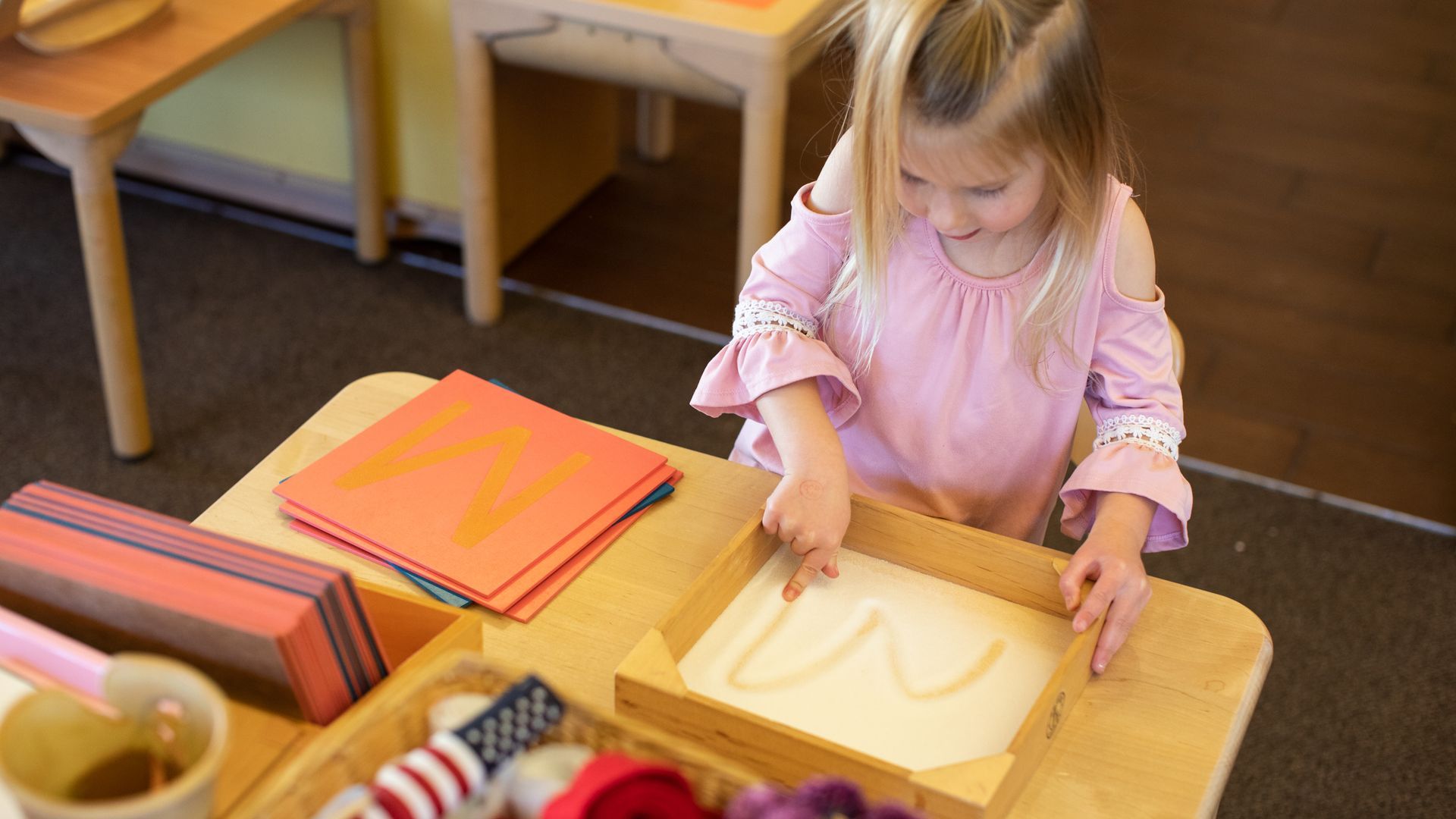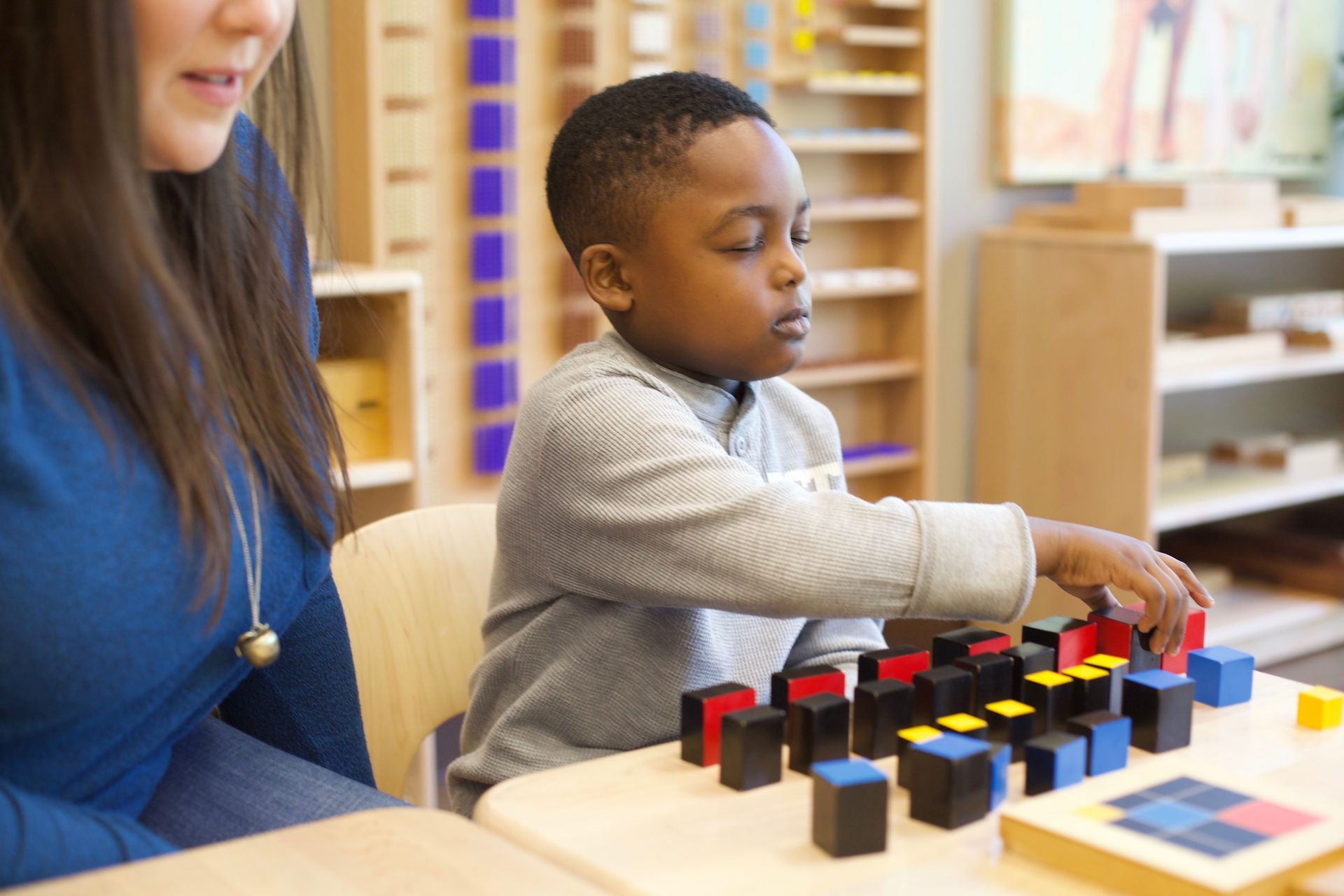
In our Early Childhood (Primary) classroom at Rose Hill Montessori School, visitors are often captivated by the sight of a young child completely absorbed in their work. One child might be carefully tracing a textured shape, while another sits with their eyes tightly closed, smiling as they reach inside a small cloth bag.
These beautiful moments are part of our intentional focus on sensorial development. Dr. Maria Montessori recognized that children are sensory explorers who construct their understanding of the universe through movement and touch. In our prepared environments, we offer specially designed materials to help young children refine their senses.
While we are all familiar with the traditional five senses, tactile (touch), visual (seeing), auditory (hearing), olfactory (smell), and gustatory (taste), the Montessori curriculum supports an additional, fascinating capacity: the
stereognostic sense.
What is the Stereognostic Sense?
The word stereognostic comes from the Greek words stereo (meaning "around" or "three-dimensional") and gnosis (meaning "to know"). Having a refined stereognostic sense means being able to identify the shape, form, and identity of a three-dimensional object entirely through tactile manipulation, without any visual or auditory input.
Dr. Montessori joyfully observed this phenomenon in her early classrooms:
“They are very proud of seeing without eyes, holding out their hands and crying, ‘Here are my eyes!’ ‘I can see with my hands!’” — Dr. Maria Montessori,
The Montessori Method
Children develop a rich mental picture of an object through the simultaneous use of touch and muscular memory. Every single thing a child touches helps form a cognitive pathway. Because young children absorb everything from their immediate environment, the more hands-on experiences they have with varied textures and shapes, the more accurate and precise their real-world perceptions will be.
When we combine language (giving precise names to objects) with physical, muscular memory, we give the child a more complete, sophisticated framework for understanding their world.
The Magic of the Mystery Bag
In our Primary classroom (Ages 3–6), we bring this concept to life using a beloved, specialized material known as the Mystery Bag (or Stereognostic Bag). These drawstring bags contain a series of real, everyday objects that children have already encountered in their environment, ensuring they are already familiar with the vocabulary.
The Experience: A Window Into the Classroom
When a guide introduces a Mystery Bag, the presentation is slow, intentional, and respectful of the child's intelligence.
First, we demonstrate how to carry the bag carefully to a table. We show how to open and close the drawstring, inviting the child to try this physical skill themselves. Next, we peek inside, remove one item at a time, and place it on the table, naming it precisely. We invite the child to feel each item, connecting the physical sensation to the spoken word. Once all items are laid out, we name one and ask the child to place it back inside, ensuring they know exactly what the bag contains.
Then, the true fun begins!
The guide explains that they are going to find an item using only their hands. Reaching into the bag without looking, the guide feels around, grasps an object, and, with quiet enthusiasm, describes the object and then names the item before pulling it out to reveal it to the child. The watching child often takes great delight in this "magic" feat.
Once the guide demonstrates the process, the child takes over. Because Montessori materials possess an internal
control of error, the child instantly discovers upon pulling the object out whether their tactile perception matched reality. This builds immense confidence, pure independence, and a deep love for self-directed learning.
Shifting Rhythms Across the Planes of Development
Within our mixed-age environments, a simple material like the Mystery Bag beautifully scales to meet the shifting needs of the child.
The Young Primary Child: Building Concrete Perception
For a three- or four-year-old, the focus is entirely on physical manipulation, functional independence, and refining the muscular sense. Pulling a real object from the bag satisfies their internal drive to master the physical world.
The Older Primary Child: Moving Toward Abstraction
As children approach the conclusion of their three-year cycle in the Primary room, their reasoning mind takes center stage. An older child might blindfold themselves entirely, or work with a peer to guess highly complex geometric shapes, turning the lesson into a collaborative social game that prepares them for the intellectual exploration of the Elementary years.
Dr. Montessori described this profound muscular connection in
The Discovery of the Child:
“When the hand and arm are moved about an object, an impression of movement is added to that touch. Such an impression is attributed to a special, sixth sense, which is called a muscular sense, and which permits many impressions to be stored in a ‘muscular memory,’ which recalls movements that have been made.”
Experience the Sensorial Journey
The stereognostic bags are just one example of how the Rose Hill Montessori environment respects your child’s intelligence and fuels their natural curiosity. When a child is given the freedom to explore through touch, their brain forms a rich, three-dimensional image of the world, laying a stable foundation for lifelong learning, geometry, and abstract thought.
See Our Prepared Environments in Action
The best way to appreciate the depth of a Montessori sensorial education is to watch it unfold in real time. We warmly invite you to reach out and
schedule a campus tour at Rose Hill Montessori School here in Boise, Idaho, to see firsthand how our prepared environments support your child's journey from root to bloom.