Understanding human development at each natural stage is crucial to fostering optimal, peaceful growth. This fundamental belief forms the absolute bedrock of the Montessori philosophy, which is deeply rooted in the changing developmental needs of children.
This post explores the second of Dr. Maria Montessori's four distinct stages of growth, what we call the Planes of Development: birth through age six, ages six to twelve, ages twelve to eighteen, and ages eighteen to twenty-four. Each of these stages brings unique internal capacities, and recognizing them allows us to better support children on their educational journey.
Childhood (Ages 6–12): The Elementary Years
Unlike the dramatic physical changes seen in infancy or the intense transitions of adolescence, the second plane of development is characterized by a unique period of relative physical stability. This phase serves as a critical time for children to build upon the functional independence they established in early childhood while preparing for the social and economic horizons ahead.
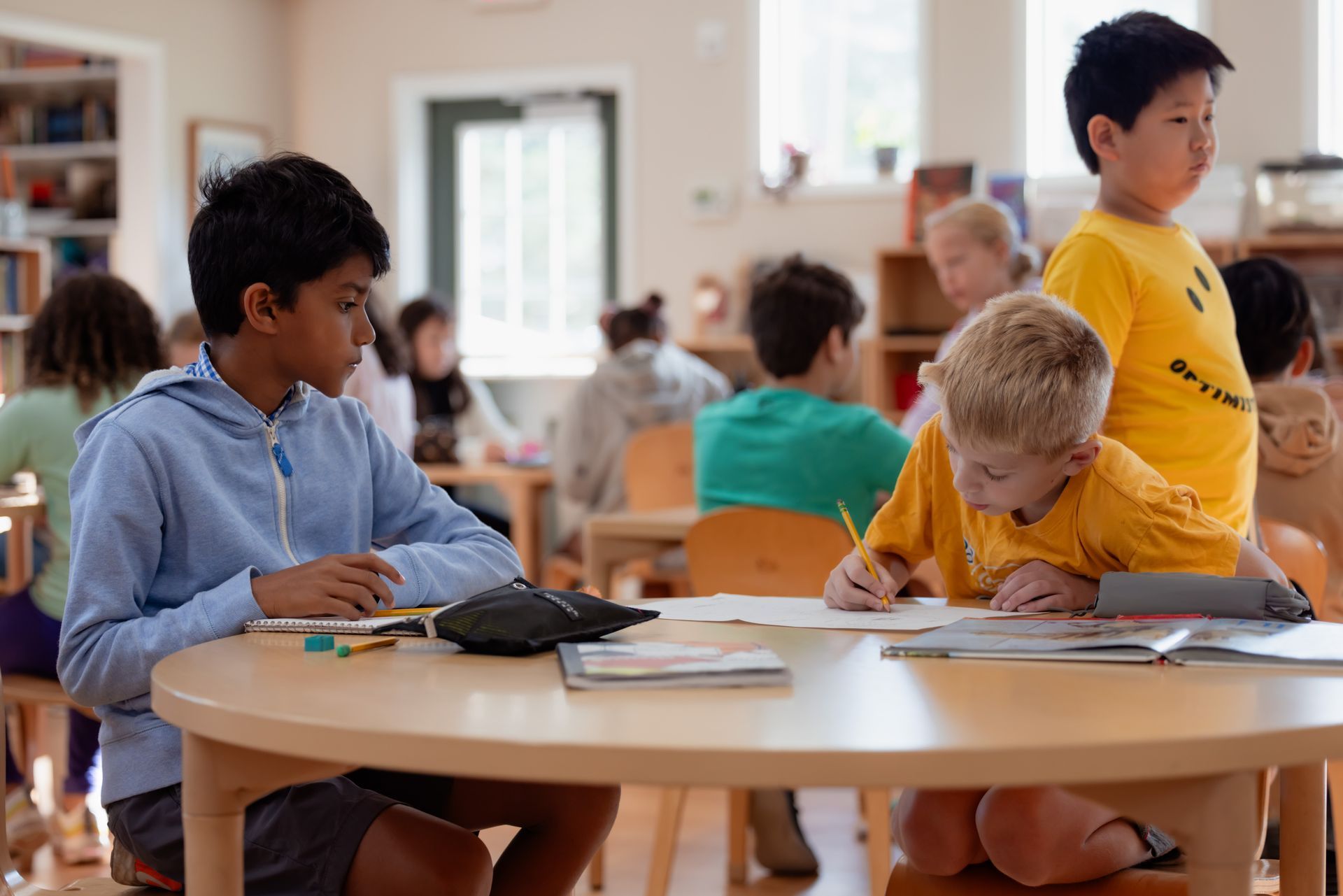
Despite its calm exterior, this period is an essential, highly active time for the construction of social, intellectual, and moral skills. At Rose Hill Montessori School, our Elementary program is intentionally designed to act as a supportive framework for these emerging traits.
Key Characteristics of the Elementary Child
When children enter our Elementary learning community, they undergo a massive internal shift. Here are the core developmental signposts you will observe during these years:
Physical Sturdiness and Stability
Children in this stage experience a steady, strong period of physical growth. They lose their primary teeth, their skin loses its baby softness, and their body becomes noticeably leaner and stronger. The soft, rounded contours of early childhood give way to a more defined physical form. Growth slows down compared to the rapid pace of the first plane, bringing greater physical endurance, resilience, and a high level of health and coordination.
Reasoning and Abstraction
While the Primary child absorbs information effortlessly through hands-on interaction, the Elementary student moves from concrete manipulation to deep abstract thought. No longer content with simply knowing what something is, their reasoning mind takes center stage as they seek to discover the underlying why and how behind everything. Their imagination flourishes beautifully, allowing them to transcend time and space to mentally travel through history or explore the cosmos.
The Intellectual Conquest of Independence
While the Primary child’s internal drive says, “Help me do it myself,” the Elementary student’s drive says, “Help me think for myself”. Their independence becomes abstract as they form their own ideas, solve complex problems, and take responsibility for their own learning. In our multi-age classrooms, they launch into deep studies of mathematics, history, geography, and science with an attitude of: "Don’t tell me. Let me figure it out myself."
The "Herd Instinct" and Socialization
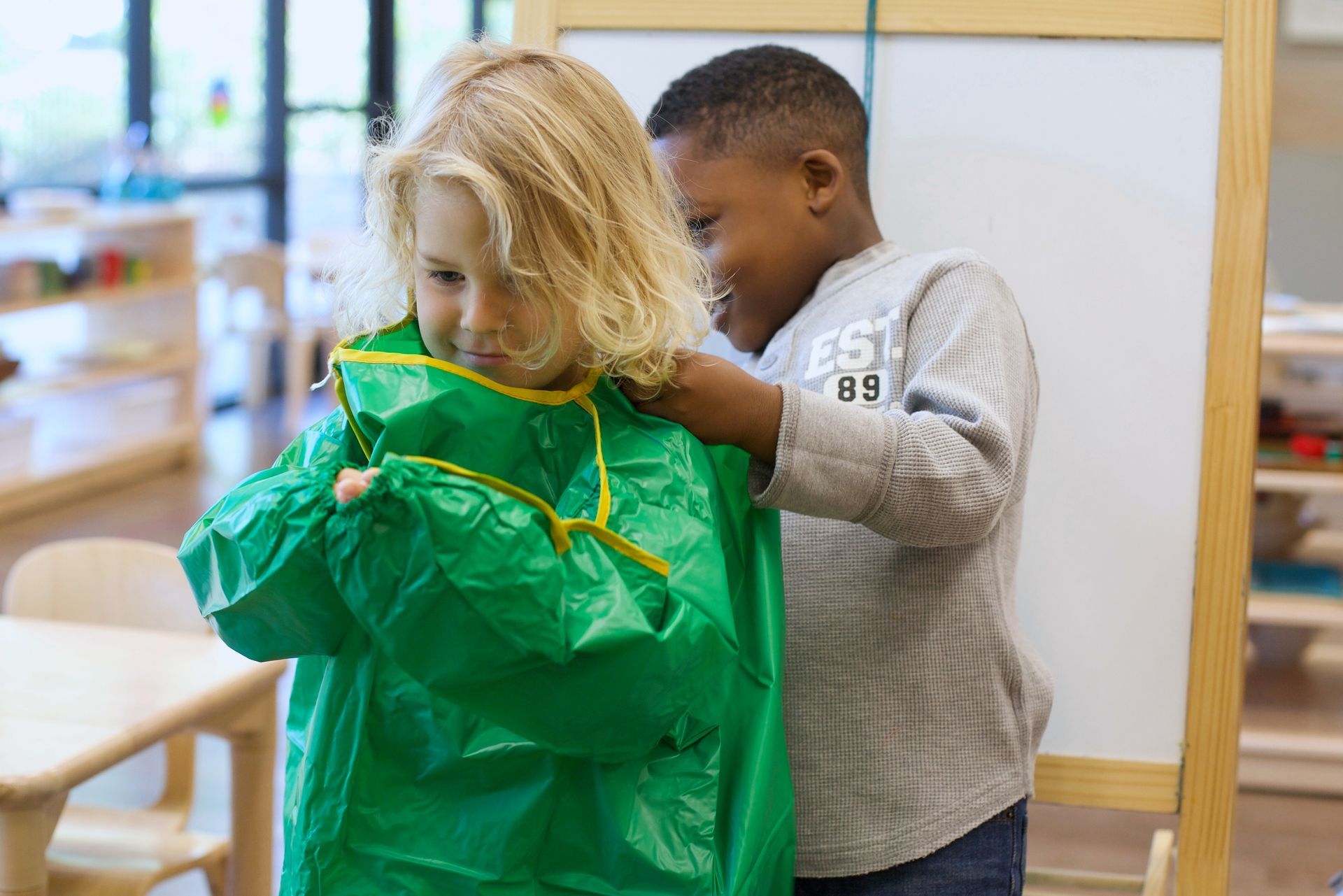
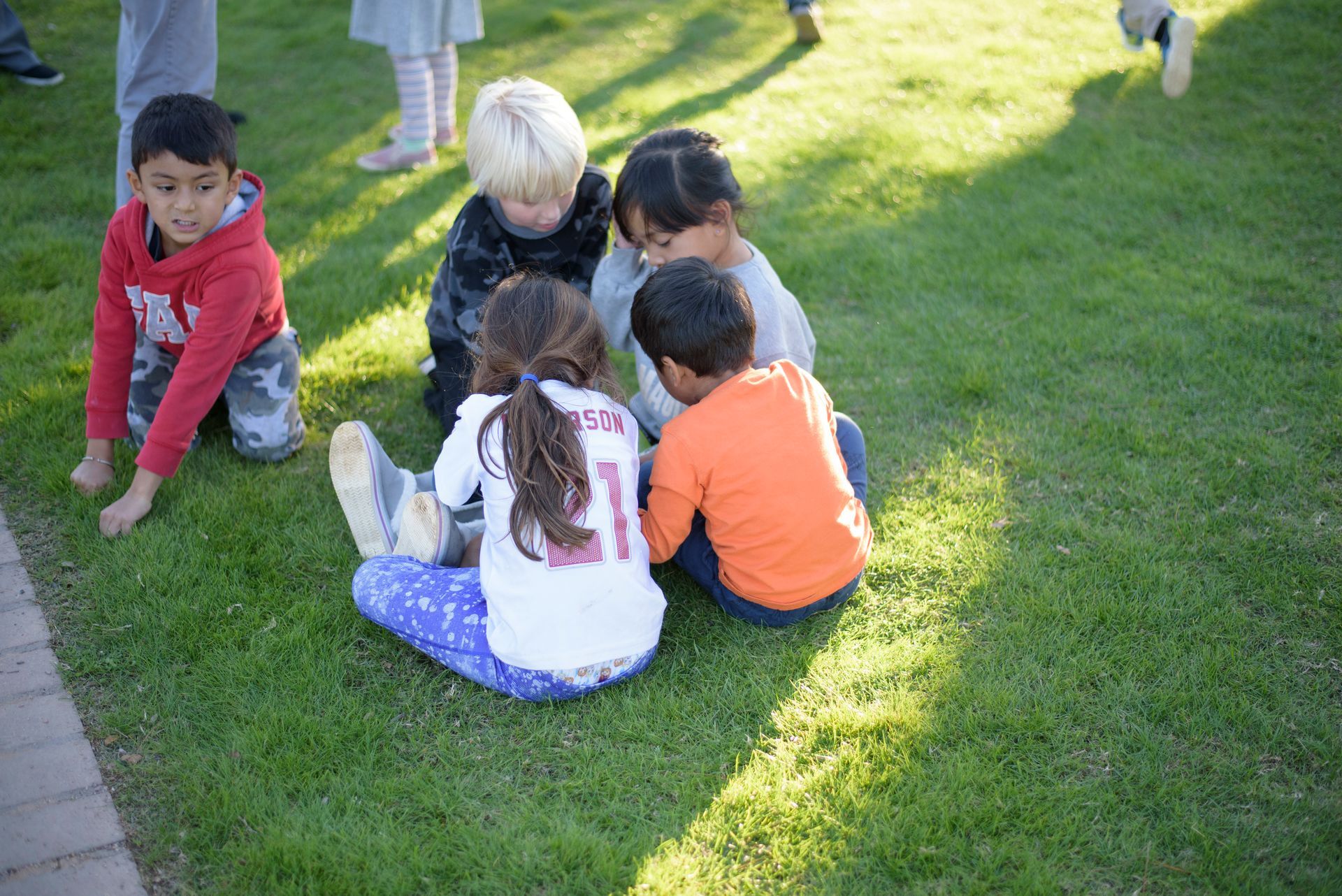
One of the defining features of this plane is an intense drive for peer interaction. Children exhibit a strong "herd instinct", a powerful need to belong to a group and collaborate closely with others. Montessori described the Elementary classroom as a true "practice society," a safe space where children naturally form micro-societies, negotiate rules, navigate peer dynamics, and practice social responsibility.
Moral Development and a Sense of Fairness
As elementary children look outward, they develop a fierce, innate drive toward fairness and justice. They are highly sensitive to equity and are likely to question rules, debate boundaries, and voice concerns when they perceive inconsistencies. This phase is about sorting out complex questions of right, wrong, and human empathy.
A Fascination with the Extraordinary
Second plane children are drawn to the exceptional. Their imagination is sparked by heroes, historical figures, and ancient civilizations that seem larger than life. This fascination provides them with an ideal avenue for exploring concepts of strength, bravery, leadership, and the human condition.
A Supportive, Community-Based Prepared Environment
In our Elementary environment, the classroom is structured to mirror this highly social stage of development.
To understand how this looks in practice, we can trace how the Cosmic Education framework naturally guides our students. It begins with the grandest view of the universe through the Five Great Lessons, which are impressionistic stories told to inspire awe and spark the child's imagination. From this massive, overarching big picture, all specific academic disciplines emerge naturally, narrowing down into the details of zoology, botany, history, geography, mathematics, and language. This ensures that instead of studying subjects in isolated bubbles, our elementary students always understand how every detail connects back to the grand, cosmic whole.
Collaborative Learning & "Going Out"
Because children at this age thrive in groups, our environment emphasizes peer collaboration. Students work together on massive research projects, manage timelines, and sit down at community meetings to practice logic and empathy during conflict resolution.
Furthermore, because their thirst for knowledge extends beyond the school walls, we encourage "Going Out" experiences. These are student-planned, small-group excursions into the Boise community, such as visiting a local library, interviewing an expert, or executing a service project. The children identify the need, arrange the logistics, and execute the trip themselves, building real-world capability.
Cosmic Education & The Five Great Lessons
Dr. Montessori referred to the elementary curriculum as Cosmic Education. We always start with the grandest picture imaginable, the universe as a whole, to provide an intellectual "filing cabinet" for future details.
The curriculum revolves around the Five Great Lessons, which are impressionistic stories told to inspire awe and gratitude:
- The Story of the Universe (Physics and Chemistry)
- The Coming of Life (The Timeline of Life, Zoology, and Botany)
- The Coming of Human Beings (History)
- The Story of Writing (Language and Literacy)
- The Story of Numbers (Mathematics and Geometry)
From these grand stories, all specific areas of study emerge naturally, showing children the profound interconnectedness of all life.
Home and School Alignment
To bridge the environment between our classrooms and your home, parents can support this unique developmental stage through a few intentional practices:
- Channel the Drive for Fairness: Welcome their questions about rules and family boundaries as healthy signs of moral growth, utilizing regular family meetings to co-create routines together.
- Support Community Contribution: Encourage their natural desire to help by involving them in the full process of meal planning, grocery shopping, and household organization.
- Encourage Large-Scale Thinking: Foster their imagination by helping them research community service projects or causes that capture their heart, allowing them to take ownership of the action plan.
The Path to Interdependence
Every bit of intellectual and social freedom experienced in the Elementary years is simply the path toward true maturity. The hard-won independence built during this plane is not meant to be held alone; it becomes a conscious tool for service, connection, and mutual respect within a peaceful, collaborative community.
See the Second Plane in Action
Want to see how a multi-age classroom layout challenges and supports the reasoning mind of an elementary student? We warmly invite you to connect with us and schedule a campus tour at Rose Hill Montessori School here in Boise, Idaho, to witness the joy of cosmic education firsthand.