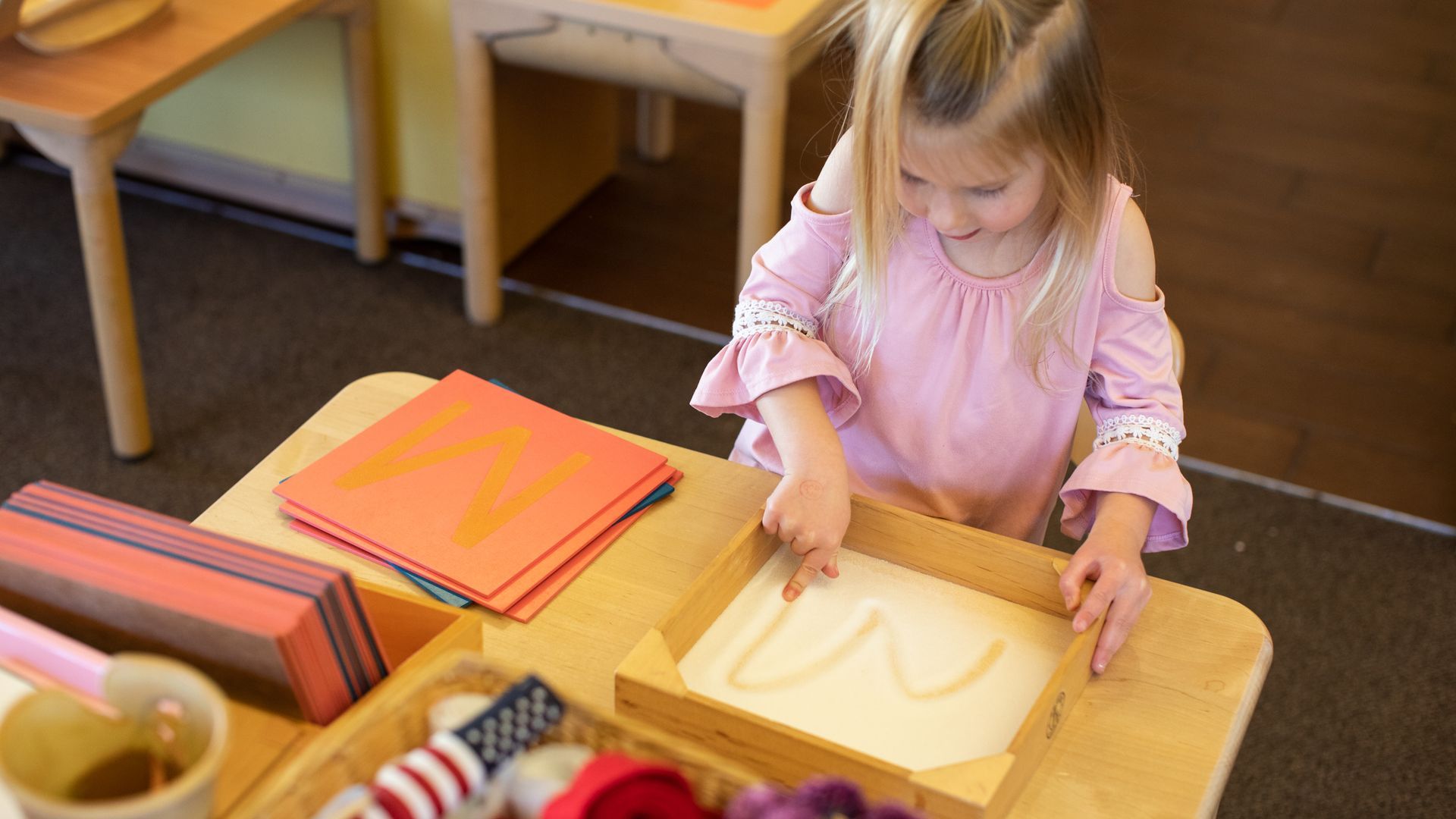
Have you ever noticed how deeply a young child reacts to a sudden change in routine? Even a subtle shift in the schedule can feel disorienting. On the flip side, young children possess an incredible ability to internalize the natural flow of their daily environment. They intuitively know when it is time to wash hands, gather for group time, or put away a material on the shelf.
It is equally fascinating to observe how effortlessly a young child absorbs language, transitions from crawling to walking, or becomes utterly captivated by tiny details in nature.
During these formative years, children are guided by an inner developmental drive. Think of a toddler who insists on climbing the same set of stairs over and over again. We might try to redirect them, but their focus remains steadfast, and despite the immense physical effort required, the activity brings them visible delight rather than exhaustion.
In Montessori education, we observe these intense, passionate windows of development with deep respect. We call them Sensitive Periods.
What Are Sensitive Periods?
To illustrate sensitive periods, Dr. Maria Montessori shared the story of newly hatched caterpillars. These tiny creatures hatch in sheltered nooks on a tree trunk, yet they are instinctively drawn toward light. By moving toward the light at the tips of the branches, they find the softest, youngest leaves suitable for their delicate digestive systems. The caterpillars aren't consciously planning their meal; they are simply responding to a biological impulse. Once they grow and no longer need those specific leaves, the drive toward bright light fades. That sensitive period closes, and they enter the next stage of development.
Like the caterpillar, a young child in a sensitive period becomes deeply absorbed in acquiring a specific skill or capacity. Neurologically, specific groups of neurons become highly active, building foundational neural networks in the developing brain.
These temporary windows of opportunity are characterized by an irresistible urge to repeat an activity until a skill or understanding is fully mastered.
Dr. Montessori identified four primary sensitive periods in early childhood:
- Order
- Language
- Refinement of the Senses
- Movement
1. The Sensitive Period for Order
(Most intense: Birth to age 3, continuing through age 6)
While adults value organization because it saves time and reduces stress, young children require order in a far more fundamental way. External order provides the essential framework for a child's understanding of the world.
If a child's surroundings or routines are constantly shifting, it is like trying to build a house on an unstable foundation. Constant adaptation drains energy that would otherwise go toward constructive development. When children experience a predictable, orderly environment, where objects have designated places and routines follow a clear sequence, they build trust, feel secure, and develop a calm, structured internal mind.
2. The Sensitive Period for Language
(Birth to age 6)
From birth to age three, a child effortlessly absorbs spoken language from their environment. From ages three to six, that foundation expands into vocabulary refinement, reading, and writing.
During this window, children absorb the subtle cadence, grammar, and pronunciation of the spoken language around them. Because their minds are like sponges, they benefit immensely from rich, precise, and authentic language. Rather than using baby talk, we honor this period by naming real objects accurately, reading rich literature, and engaging in respectful, two-way conversations.
3. The Sensitive Period for Refinement of the Senses
(Birth to approximately age 4.5)
Children discover their world through sensory exploration. This sensitive period doesn't alter a child's physical eyesight or hearing; rather, it refines their brain's ability to discriminate between subtle differences in sound, texture, color, weight, and form.
When provided with sensorially rich, purposeful materials, children learn to classify and organize their impressions. This refined sensory discrimination lays the groundwork for abstract thinking, mathematical concepts, and artistic appreciation later in life.
4. The Sensitive Period for Movement
(Birth to age 4)
Movement is how children interact with their environment, express their emerging personalities, and build physical independence. After mastering basic gross motor skills in infancy, children between ages two and a half and four focus on refining their coordination and grace.
During this period, movement flourishes when directed toward a meaningful purpose. Young children naturally want to participate in real-life tasks, like washing vegetables, pouring water, sweeping, or buttoning a sweater. While a toy kitchen offers temporary entertainment, participating in real food preparation satisfies a deeper developmental need, helping the child refine fine motor control and feel like a contributing member of their community.
Power, Potential, and Joy
The term sensitive period is a gentle reminder for adults to tread mindfully and respond with care to these vital developmental windows.
When a child is within a sensitive period, acquiring a skill feels natural and joyful. Once the window passes, those same skills can still be learned, but doing so requires conscious effort, drill, and repetition, much like learning a second language as an adult compared to absorbing it in early childhood.
Most beautifully, when a child's sensitive periods are met with a thoughtfully prepared environment and supportive guidance, they experience a profound sense of inner peace, confidence, and joy.
Experience the Prepared Environment
At Rose Hill Montessori, our classrooms are specifically designed to meet children precisely where they are in their developmental journey. We invite you to
schedule a tour to observe our students' focus and joy in action.