“The mind takes some time to develop interest, to be set in motion, to get warmed up into a subject, to attain a state of profitable work. If at this time there is interruption, not only is a period of profitable work lost, but the interruption produces an unpleasant sensation which is identical to fatigue.”
— Dr. Maria Montessori, What You Should Know About Your Child
Consider, as an adult, what it takes for you to do your best work. What must your environment look like? What do you need from others? What constraints do you need removed in order to meet your goals? Most of us need a quiet, predictable space, a clear stretch of time, and the freedom to focus without constant pings or interruptions.
Dr. Maria Montessori spent years observing children, recognizing that immense, self-directed learning takes place when they are fully engaged with their environment. Left without adult interruption, she witnessed pure magic: the natural development of deep concentration, problem-solving, and a profound sense of internal satisfaction.
What Montessori realized is that we, as adults, often need to get out of the children's way. We imagine they require continuous external direction or transactional rewards, but what they truly need is time, respect, and a prepared environment where they can focus deeply. Thus, the three-hour morning work cycle was born, a cornerstone of the Rose Hill Montessori School experience.
How the Morning Begins
The start of the work period begins seamlessly as children arrive at school. While some mornings or specific times of the year might include a brief community gathering, the baseline rhythm of our school is grounded in an individual transition from home to the classroom.
A typical morning begins with a child hanging their belongings on a designated, child-sized hook, changing their shoes, and greeting their guide with a warm, respectful hello. Some children take a few minutes to socialize or gently find their footing for the day. Others are so eager to begin that they waste no time at all, heading straight to a material on the shelf they have been thinking about since the afternoon before.
Shifting Rhythms Across the Planes of Development
Because our prepared environments are tailored to the natural stages of growth, the daily workflow adapts beautifully as children move from early childhood into the elementary years.
The Primary Classroom (Ages 3–6): Individual Self-Construction
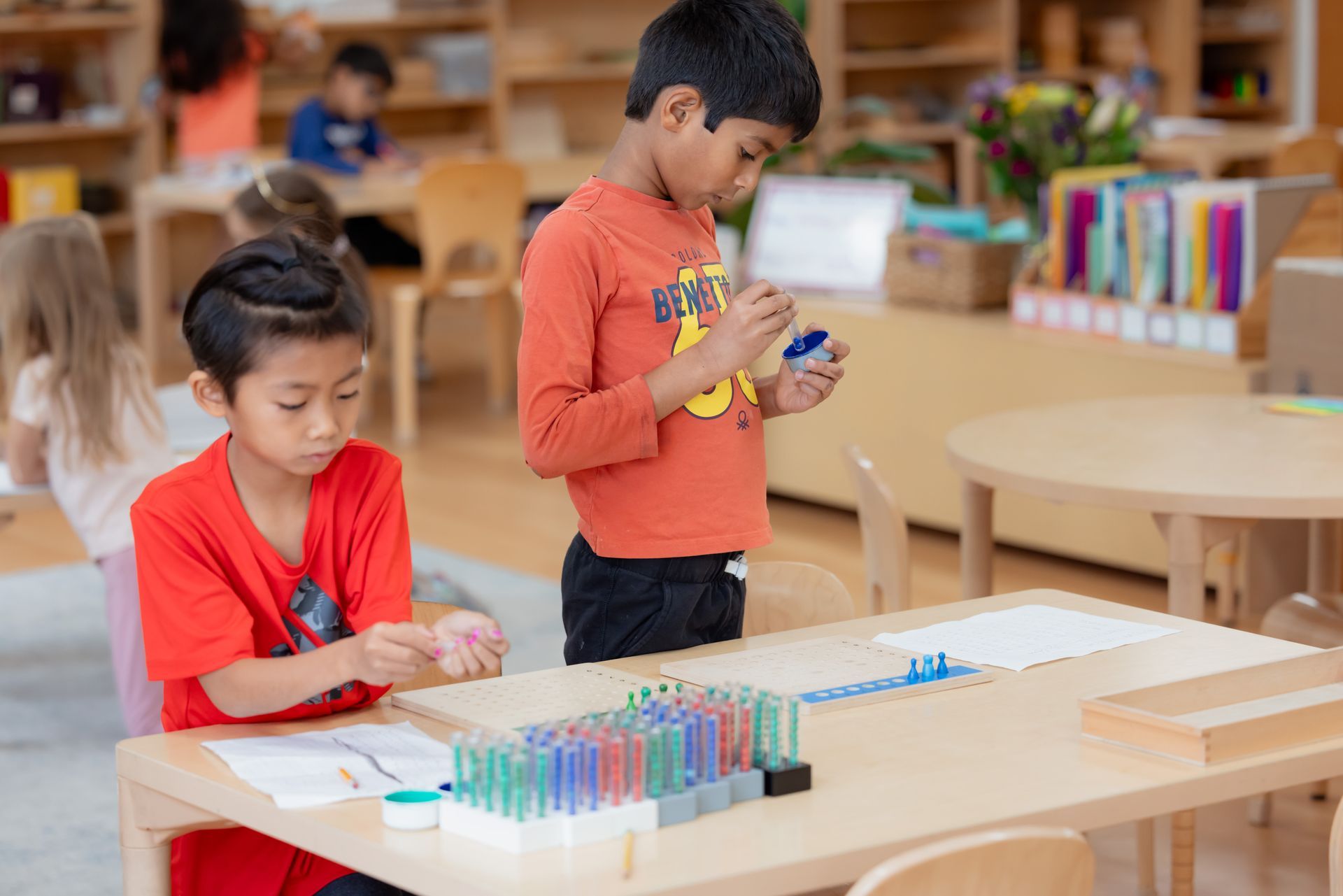
During the first plane of development, children are focused on building functional physical independence. In our multi-age Primary environment, you will typically observe children working independently, though in close proximity to their peers.
- A child will carefully lay out a work rug on the floor.
- They gather their chosen materials from the shelf, delve into a deeply concentrated state, and repeat the activity as many times as their internal drive requires.
- When finished, they independently clean up their workspace, returning the materials exactly as they found them, ready for the next child to use.
The Elementary Classroom (Ages 6–12): The Practice Society
In the second plane of development, the child's focus shifts to an intense drive for social connection and abstract reasoning. Because of this developmental shift, the start of an Elementary work cycle can feel a bit busier and more socially active.
- Instead of working in isolation, students naturally gravitate toward partner or group work.
- They collaborate on large-scale research projects, negotiate responsibilities, and map out their plans together.
- Their independence becomes deeply collaborative as they use their hard-won skills to support one another, turning the classroom into a true "practice society".
The Role of the Adults: Protecting Concentration
A classic Montessori environment is supported by a collaborative team: the guide and the classroom assistant. To protect the children's concentration, the adults move through the room as unobtrusively as possible.
The classroom assistant maintains the overall order and physical beauty of the room, ensuring that materials are complete and fully accessible. They monitor the community baseline, stepping in to redirect a child only when necessary, always preserving the child's independent problem-solving whenever possible.
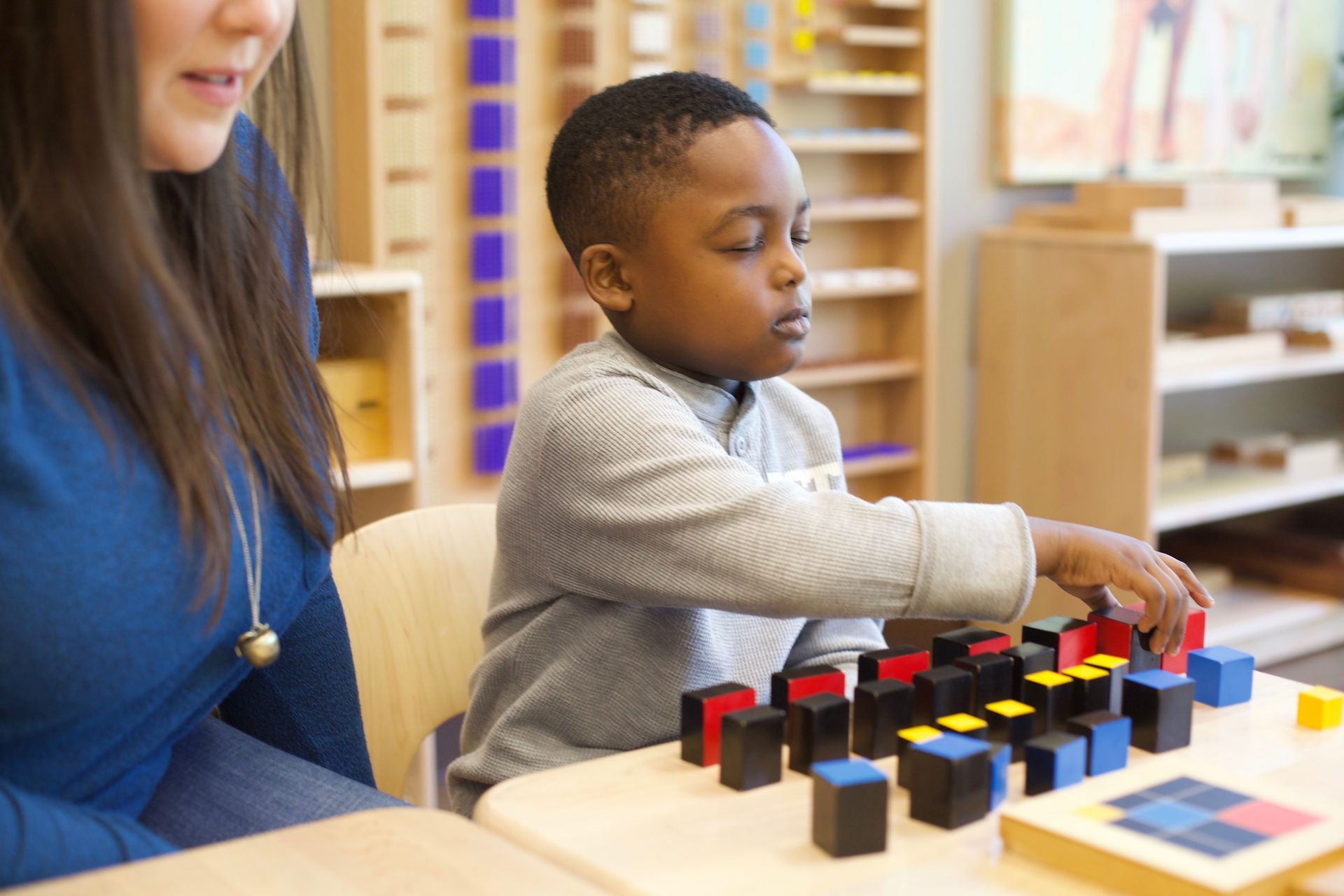
This intentional scaffolding allows the guide to focus on two primary responsibilities: acute observation and presenting individual or small-group lessons. Lessons are rarely given to the entire class at once. Instead, the guide quietly invites one or two children to a shelf to introduce a new concept perfectly tailored to their current learning stage.
To eliminate unnecessary interruptions, our classrooms utilize respectful, non-verbal structures. For example, if a guide needs to check in with a student who is deeply concentrated on a math layout, they might gently place a small personal name tag beside the child's workspace. This signals to the child that the guide wants to check in whenever there is a natural stopping point.
The Phenomenon of "False Fatigue"
Do children really focus for three hours straight without a break? Not usually! Just like adults, children need natural variances in their focus throughout the morning.
Because our environments are designed for complete functional freedom within structured limits, children are empowered to meet their own basic needs independently. If a child feels hungry, they are welcome to have a snack. If they need to use the restroom, they do not need to ask an adult for permission. If they simply need to stretch their legs, look out the window at a bird, or quietly observe an older peer working on a complex grammar layout, they are fully permitted to do so.
However, there is an incredibly consistent phenomenon observed in Montessori schools worldwide that occurs around 10:00 or 10:30 each morning, known as false fatigue.
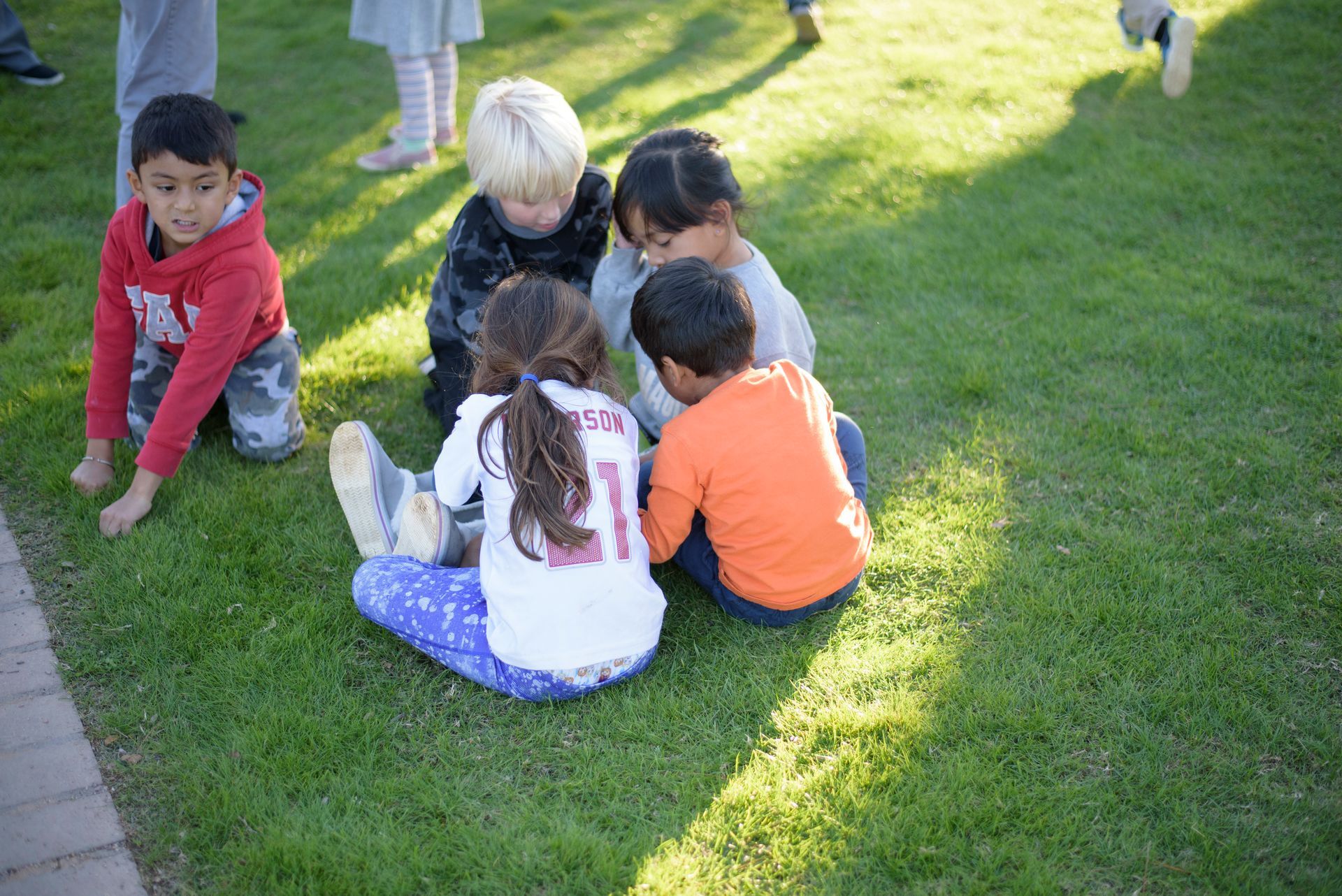
Like clockwork, the collective volume of the classroom will gently rise. Children may begin wandering, fewer students are actively engaged with materials, and the room can appear temporarily unsettled. To an outside observer, it looks like the children are tired and finished with their work. While a traditional approach might respond by ringing a bell, clapping hands, or enforcing an adult-directed circle time, Montessori guides are trained to hold back and observe.
False Fatigue is actually a natural, healthy pause in the collective rhythm of the morning. If the adults remain calm and allow the environment to settle itself, a beautiful shift occurs. Within a few minutes, the wandering ceases, the room grows quiet, and the children dive back into an even deeper, more advanced level of concentration and complex work than they displayed earlier in the morning. It is a spectacular testament to the child’s innate capacity for self-regulation.
Trusting the Child’s Timetable
Ultimately, the three-hour work cycle is an organizational system designed to honor the child's natural way of balancing focused intellectual growth with personal physical needs. A single morning for a child might include working with a geography map, having a small snack, receiving a specialized lesson in long division from the guide, chatting with a friend, and writing a short story.
By providing an unhurried, respectful framework, we show our students that we trust their intelligence and capability. In return, they rise to the occasion, building the emotional security, focus, and independence that leads to a peaceful, interdependent community.
See the Work Cycle in Action
The best way to truly comprehend the peace and productivity of a three-hour work cycle is to watch it unfold in real time. We warmly invite you to reach out and
schedule a campus tour at Rose Hill Montessori School here in Boise, Idaho, to observe our prepared environments and witness this beautiful rhythm firsthand.