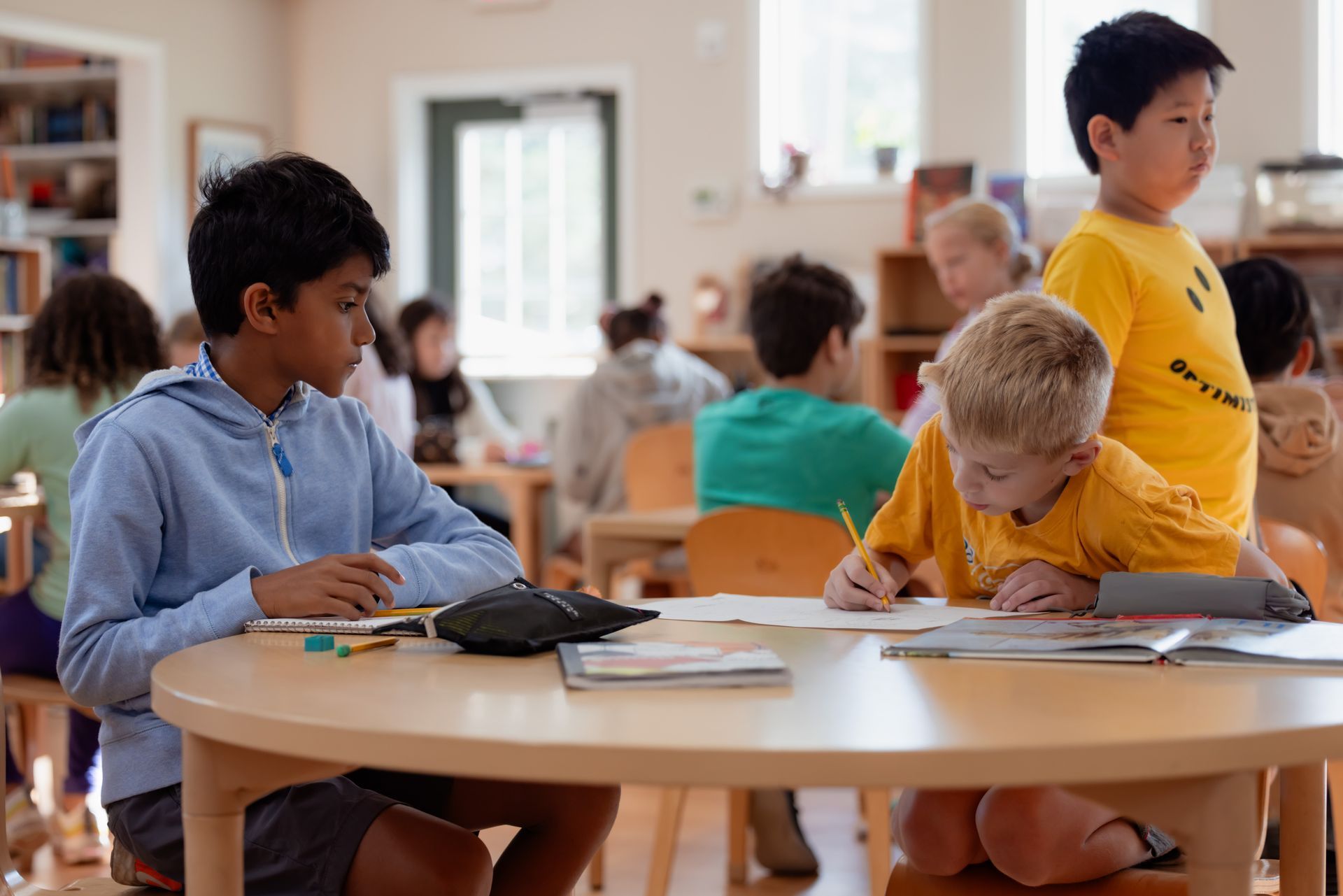
When visitors step into a classroom at Rose Hill Montessori School for the first time, one of the things that often surprises them is the sight of children of varying ages, sizes, and abilities all working peacefully in the same room. A common question we receive from prospective parents is: “How can a single guide support and challenge a three-year-old and a six-year-old at the very same time?”
While there are many factors that make this dynamic successful, the true engine behind our mixed-age classrooms is what we call the three-year cycle.
What is a Montessori Three-Year Cycle?
In a traditional school setting, children are shuffled to a new room with a new teacher and a new group of peers every nine months. In contrast, Rose Hill students enter a classroom community as the youngest members and remain in that very same learning community for three full years. Over this period, they experience a beautiful, predictable rhythm of growth and development.
To understand how this looks, it helps to think of a perennial flower:
- Year One (Establishing Roots): When a child first enters our Early Childhood (Primary) or Elementary environment, it is a period of transplantation. They need time to establish their roots. External academic growth might seem quiet initially, as the child’s primary work is exploring the environment, learning the routines, and finding their footing in the community.
- Year Two (Budding & Growth): By their second year, the children are established. They know the rhythm of the day, feel a deep sense of ownership over their space, and begin to branch out. They experiment with more challenging materials and blossom both socially and academically.
- Year Three (The Full Bloom): In their third year (the Kindergarten year in Primary, or 3rd/6th grade in Elementary), children become the undisputed experts of their community. Their growth becomes exponential and abundant. Because they had the time to establish deep roots and steady stems, they are finally ready to bloom in spectacular, confident ways.
Evolving Roles: From Observer to Mentor
Because our students stay together for multiple years, the classroom community naturally begins to feel like a cohesive family. Moving through the three-year cycle allows every child to experience the unique responsibilities, social nuances, and opportunities that come with being the youngest, the middle, and the oldest in a group.
The younger children look up to their older peers, quickly learning through daily observation how to care for the environment, how to resolve conflicts, and what exciting, advanced academic work awaits them.
Meanwhile, the oldest students serve as the natural leaders and mentors of the room. As third-year students master specific concepts, they are given opportunities to give lessons to younger classmates. This process is deeply and mutually beneficial: the younger child receives a lesson from a beloved older peer, and the older child synthesizes and solidifies their own learning by teaching it. Through this cycle, our students move seamlessly from aspiration to confidence, and ultimately, to true mastery.
The Power of Consistency
Remaining in the same classroom for three years builds a stable foundation that benefits our children and families in several profound ways:
- Deeper Connections with Guides: Our Montessori guides are deeply trained in observation. Spending three years with your child allows them to truly understand their individual learning style, emotional rhythms, and personal interests. They don't lose valuable learning time in September trying to figure out where your child stands; they can tailor presentations perfectly to where that child is ready to stretch.
- A Safe Space for Risk-Taking: True learning requires vulnerability. Because our classrooms are stable, predictable, and familiar, children feel emotionally secure enough to take big risks, make mistakes, and choose challenging work without the fear of judgment.
- Strong Family Partnerships: One of the greatest joys at Rose Hill Montessori is the meaningful partnership that develops between parents and guides over a three-year span. We get to know your family, collaborate on your child's development, and walk the parenting journey alongside you with a high level of trust.
Cultivating the "Zone of Proximal Development"
The mixed-age structure provides a natural framework for what psychologist Lev Vygotsky called the Zone of Proximal Development. This is the sweet spot of learning: the space between what a child can do entirely on their own and what they can achieve with a bit of social scaffolding and collaboration.
In our multi-age spaces, that scaffolding doesn't just come from the adult; it comes naturally from more knowledgeable peers through meaningful, daily interactions.
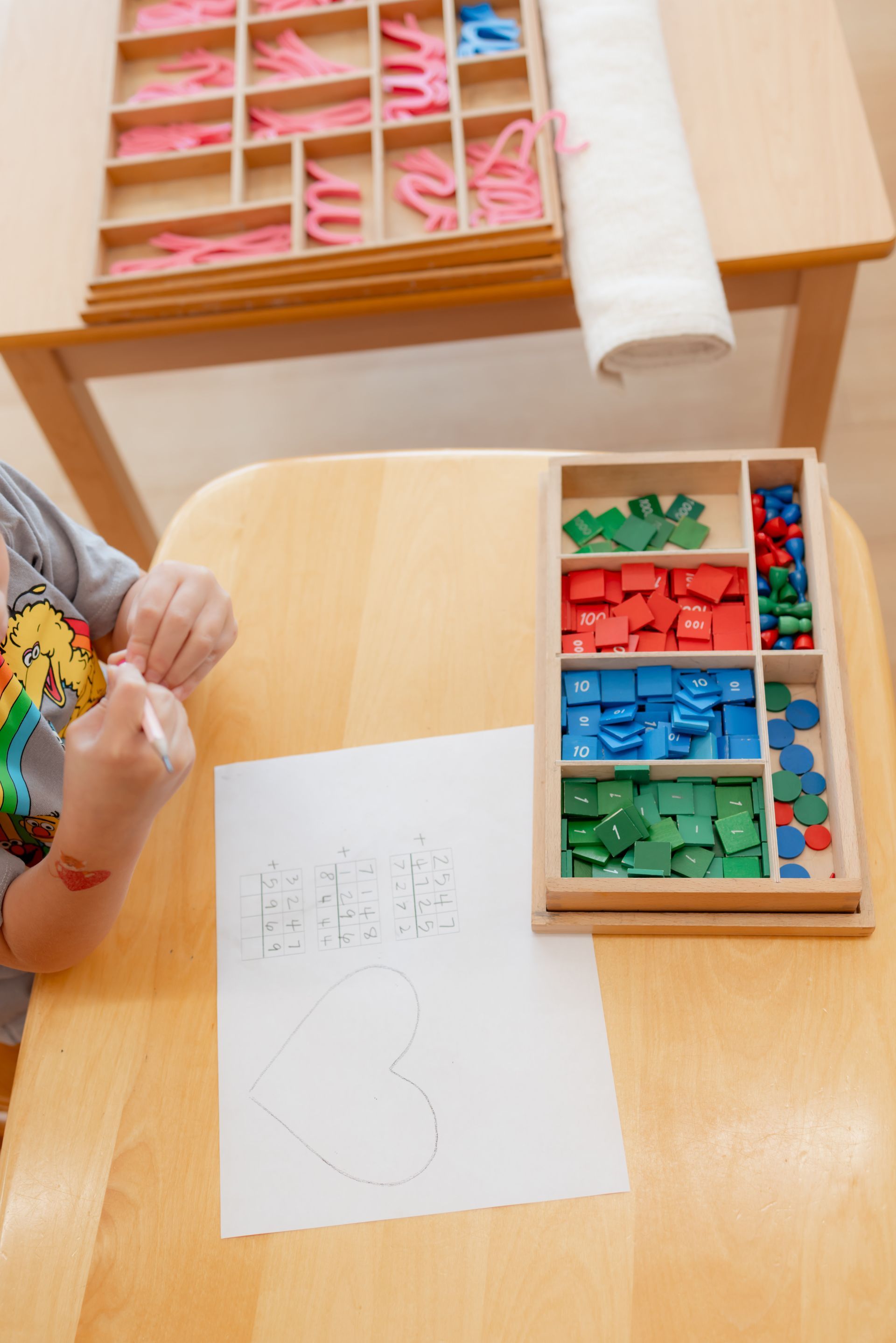
This social scaffolding shows up when a four-year-old quietly watches a six-year-old lay out complex math materials. The younger child receives spontaneous inspiration and a clear, visual roadmap for their future learning.
We also see this when knowledge is consolidated. For example, an older elementary student might help a younger peer edit a short paragraph. In doing so, the older child solidifies their own understanding of grammar rules while practicing patient leadership.
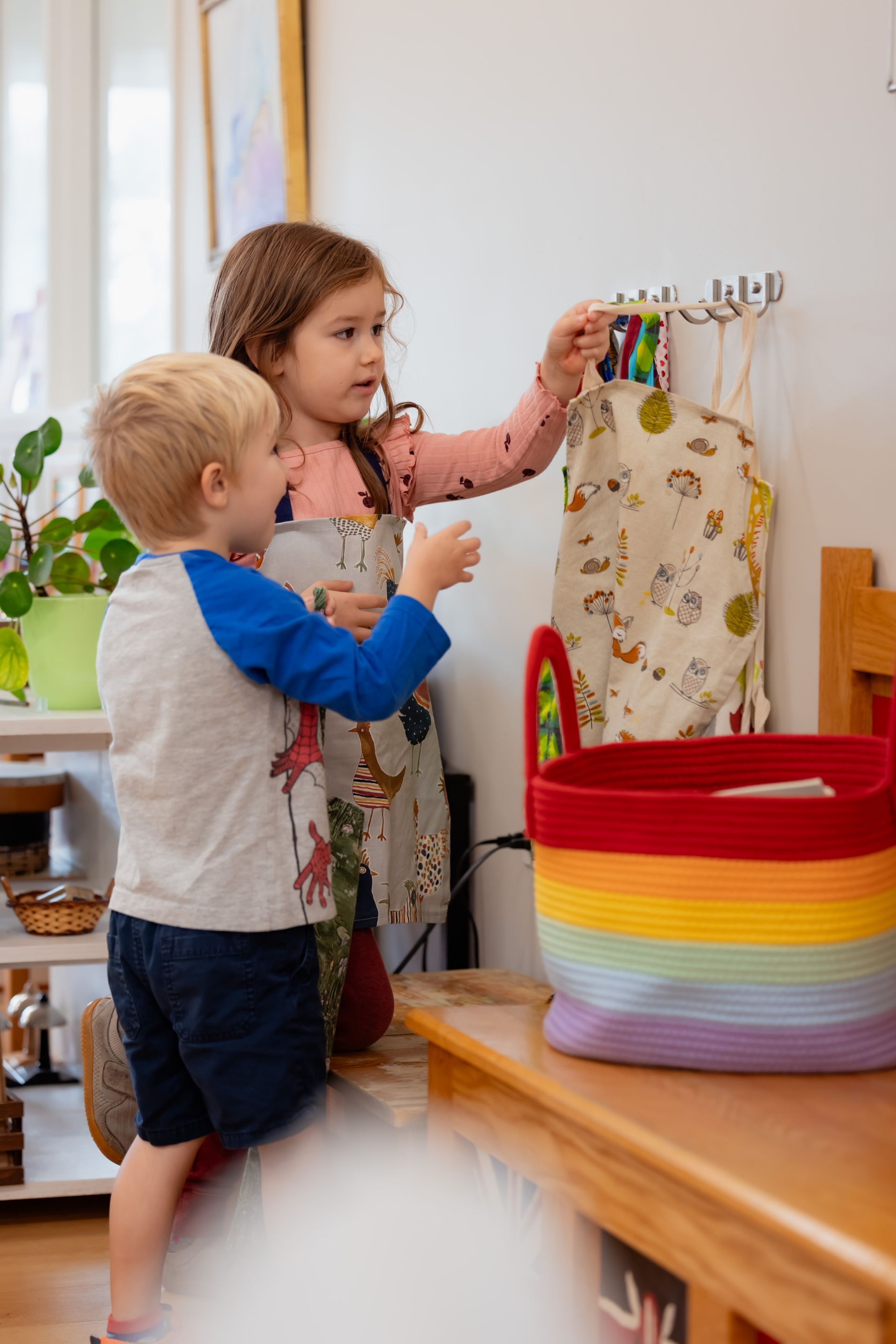
Finally, these purposeful interactions are clear when children of varying ages collaborate to tidy up a shared workspace. Through this shared responsibility, they naturally build essential life skills like empathy, patience, and community awareness.
Experience the Rose Hill Difference
The three-year cycle is not just an organizational preference; it is an essential piece of the Montessori philosophy that allows children to anchor their knowledge, build emotional intelligence, and experience what it truly feels like to be a leader.
If you would like to see this beautiful rhythm in action, we invite you to connect with us. Please feel free to reach out and
schedule a tour today to get a firsthand glimpse of our three-year cycles at Rose Hill Montessori School and see how our prepared environments can support your child's journey from root to bloom.